
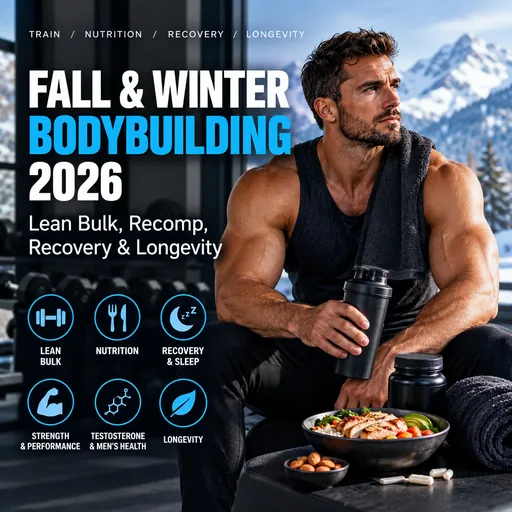
Fall and winter are traditionally the time when lifters start talking about a winter bulk, lean bulk, offseason or recomp. The modern approach is broader than simply pushing calories and chasing scale weight. Serious lifters increasingly care about muscle quality, recovery, sleep, body composition, performance, testosterone questions and staying healthy enough to keep training for years.
This 2026 guide breaks down the main goals, nutrition priorities and recovery strategies discussed in today's bodybuilding and men's health communities. Terms such as bulk, cut, recomp, protein maxxing, sleepmaxxing and gym stack are useful for understanding the conversation, but the evidence behind each idea is not equally strong.
Winter Bulk, Lean Bulk or Recomp?
The classic winter bulk means using the colder months to focus on gaining size and strength. A lean bulk takes the same idea but places more emphasis on controlling unnecessary fat gain. Recomp takes a different approach by prioritizing improvements in muscle mass and body composition without making large changes to scale weight.
For experienced lifters, the best choice depends on current body composition, training age, performance, recovery and the end goal. Someone coming out of a long cut may benefit from moving toward maintenance or a controlled gaining phase, while a lifter already carrying substantial body fat may prefer to improve body composition before pushing calories higher.
What lifters mean by a winter bulk
In gym slang, a winter bulk usually means an offseason period focused on adding muscle and improving gym performance. The phrase is popular because colder months naturally create a longer runway before the next summer cut, vacation or beach season.
What a lean bulk means
A lean bulk is a more controlled gaining phase where the goal is to add muscle without letting body fat climb unnecessarily fast. Lifters often use terms such as clean bulk, controlled bulk or offseason growth to describe a similar philosophy.
What recomp means
Recomp is short for body recomposition. The goal is to improve the ratio of muscle to fat rather than simply making the scale move in one direction. It is especially relevant to recreational lifters, people returning to training and adults who want a stronger physique without an aggressive bulk-and-cut cycle.
Protein, Creatine and the Modern Gym Stack
One of the biggest changes in fitness culture is the move from complicated supplement stacks toward a smaller foundation built around nutrition, training and recovery. Protein and creatine remain central topics because they fit both traditional bodybuilding culture and the newer longevity-focused approach to maintaining muscle.
The term protein maxxing has also become part of mainstream fitness language. In practice, the useful idea is simple: make protein intake consistent enough to support training and recovery instead of treating protein as something that only matters immediately after a workout.
Why creatine remains a staple
Creatine monohydrate has one of the strongest evidence bases among sports supplements and is used by everyone from recreational gym-goers to serious strength athletes. The discussion has also expanded beyond pure bodybuilding, with growing interest in strength, muscle preservation and healthy aging.
Why more supplements are not always better
A modern gym stack can become unnecessarily complicated very quickly. A long ingredient list, an expensive proprietary blend or a product marketed as a shortcut does not automatically mean a better outcome. Experienced lifters increasingly look for transparent labels, sensible formulations and a clear reason for using each product.
Testosterone Enanthate – Test E
Testosterone Enanthate is one of the most commonly discussed long-acting testosterone esters in bodybuilding and men's health. Our USA product catalog includes TestEn 250 for readers researching testosterone enanthate products.
Testosterone Cypionate – Test C
Testosterone Cypionate is another long-acting testosterone ester widely discussed by American lifters, particularly in conversations around TRT and performance. The corresponding product in our USA catalog is TestCy 250.
Sustanon – Multi-Ester Testosterone
Sustanon refers to a multi-ester testosterone blend and remains a familiar name in bodybuilding communities. Our current USA catalog includes Sustanon 250.
HGH – Somatropin
Human growth hormone is another major topic where bodybuilding, recovery, body composition and longevity conversations overlap. Readers researching recombinant HGH in the current catalog can find Somatropin 100 IU.
BPC-157 + TB-500 Peptide Blend
BPC-157 and TB-500 are frequently discussed in modern recovery and peptide communities, particularly around training-related tissue recovery. The USA catalog currently lists BPC157-TB500 10mg.
Anavar – Oxandrolone
Anavar is one of the most recognizable names in bodybuilding discussions around cutting, lean mass and physique definition. Readers researching oxandrolone products can view Anavar 10mg – 50 tabs.
Dbol – Dianabol
Dbol, short for Dianabol or methandrostenolone, remains a familiar term in classic and modern bodybuilding slang, especially in discussions about mass-focused training phases. The current USA catalog includes Dbol 10mg 500 tabs.
Clomid – Post-Cycle Recovery Discussions
Clomid is widely recognized in bodybuilding communities because of its association with post-cycle recovery and hormonal health discussions. The corresponding product page is Clomid 50mg – 50 tabs.
Arimidex – Anastrozole
Arimidex, also known as anastrozole, commonly appears in bodybuilding conversations involving estrogen management and hormone monitoring. The current USA product page is Arimidex 1mg – 50 tabs.
Proviron – Mesterolone
Proviron, or mesterolone, is a DHT-derived androgen that has a long history in bodybuilding and men's health discussions. In the bodybuilding community it is commonly associated with a harder, drier-looking physique and is often discussed during cutting or alongside other compounds, while medically it has also been investigated in male fertility and sperm-related disorders. Evidence for improving spermatogenesis is mixed, and Proviron should not be presented as a proven way to restore natural testosterone production or preserve muscle after an anabolic steroid cycle. Readers researching mesterolone can find Proviron 25mg – 50 tabs in our USA product catalog.
Recovery Is Part of the Program
The old bodybuilding mindset often focused almost entirely on training harder. Modern strength and physique athletes increasingly treat recovery as part of the actual program. Sleep quality, fatigue, stress, nutrition and training volume all influence whether a hard training block produces progress or simply accumulates fatigue.
Sleepmaxxing and bodybuilding recovery
Sleepmaxxing is the current internet term for aggressively optimizing sleep. The useful part of the trend is not buying every gadget or copying every viral hack. Consistent sleep timing, enough total sleep, a suitable sleep environment and realistic training loads remain more important than complicated routines.
Poor sleep can affect training quality, motivation, recovery and appetite. Lifters who suddenly struggle with recovery should therefore look at sleep and overall fatigue before assuming that a more complicated supplement stack is the answer.
Building Muscle After 40
The 40-plus lifter is becoming a much larger part of the modern bodybuilding conversation. The goal is often no longer simply maximum size. Strength, muscle retention, joint-friendly training, recovery, body composition and long-term health become equally important.
For men in their 40s, 50s and 60s, progressive resistance training and adequate nutrition remain the foundation. Recovery capacity, sleep, activity level, body fat and overall health can matter more than chasing increasingly aggressive training volume.
Testosterone Questions and Men's Health
Testosterone has moved far beyond traditional bodybuilding forums and into mainstream men's health. Searches around low testosterone, testosterone optimization, TRT, energy, libido, recovery and muscle retention increasingly overlap with the fitness audience.
A low-energy period does not automatically mean low testosterone. Sleep, excess body fat, poor nutrition, stress, alcohol, medications and other health factors can influence how a man feels and how hormone measurements are interpreted. Testosterone replacement therapy is a medical treatment that requires appropriate evaluation rather than self-diagnosis based on gym performance or social media discussions.
TRT and the modern lifter
For men considering TRT, the important questions are diagnostic rather than purely performance-based. Symptoms, repeated laboratory testing and clinical assessment provide a much better starting point than trying to chase an ideal testosterone number found online.
Muscle Preservation, Weight Loss and the GLP-1 Conversation
The rise of GLP-1 medications has created a new question for people who care about both weight loss and physique: what happens to muscle while body weight is falling? That has pushed protein intake, resistance training and muscle preservation into a much larger public conversation.
For lifters, the distinction between losing weight and improving body composition matters. The scale can move quickly while the underlying ratio of fat to lean tissue changes in a less desirable direction. That is why resistance training and adequate protein remain central topics when discussing weight management and physique goals.
From Bodybuilding to Longevity
One of the biggest trends in 2026 is the overlap between bodybuilding, performance and longevity. The same man who wants bigger shoulders, better strength and a lower waist measurement may also care about cardiovascular fitness, sleep, cognitive performance and maintaining muscle later in life.
That has changed the meaning of performance optimization. The goal is increasingly to build a body that performs well now without ignoring the decades that come afterward. Training, protein, cardiovascular fitness, sleep and evidence-based nutrition form the foundation; more experimental approaches require a much higher level of scrutiny.
Where NMN and longevity supplements fit
NAD-related supplements such as NMN are part of the current longevity and biohacking conversation. Research into NAD metabolism and healthy aging is active, but interest in a biological mechanism is not the same as proof of a meaningful improvement in human lifespan or performance. Buyers should therefore distinguish established nutrition from experimental longevity claims. For readers researching this category, see NMN350.
How Serious Lifters Should Think About Their Fall and Winter Goals
The strongest offseason strategy is usually the one that can actually be maintained. A useful framework is to choose one primary goal, track body composition and performance, keep nutrition consistent, protect sleep and adjust training when recovery starts to fall behind.
- Choose between controlled gaining, recomp or maintenance based on your current condition rather than the calendar alone.
- Keep protein intake consistent and build nutrition around normal food first.
- Treat creatine and other well-researched supplements as tools, not shortcuts.
- Track recovery and sleep instead of assuming more training is always better.
- For men over 40, prioritize sustainable strength and muscle retention alongside physique goals.
- Treat testosterone and TRT questions as medical questions that require proper evaluation.
- Be skeptical of viral biohacking claims and expensive stacks with weak evidence.
- Think beyond the next cut: long-term health and performance matter too.
FAQ: Fall and Winter Bodybuilding 2026
Is winter the best time to bulk?
Winter is a popular time to focus on gaining muscle because there is usually more time before the next summer cutting phase. However, the calendar itself does not determine whether a bulk is appropriate. Current body composition, training experience and recovery should guide the decision.
Is a lean bulk better than a dirty bulk?
A controlled lean bulk generally makes it easier to manage unwanted fat gain than an aggressive dirty bulk. The priority should be sustainable muscle growth and gym performance rather than making body weight rise as quickly as possible.
What does recomp mean in bodybuilding?
Recomp means body recomposition: improving the balance between muscle and body fat rather than focusing only on scale weight. It can be especially appealing to recreational lifters and people returning to consistent training.
Why is protein maxxing trending?
Protein maxxing is a social-media term for deliberately emphasizing high protein intake. The useful takeaway is that adequate protein is important for people who train, but more is not automatically better and extreme approaches can distract from overall diet quality.
What does sleepmaxxing mean?
Sleepmaxxing describes the online trend of trying to optimize every aspect of sleep. For lifters, the most useful parts are still the basics: sufficient sleep, consistent timing and good recovery habits rather than complicated viral hacks.
Can men build muscle after 40?
Yes. Adults can continue building and preserving muscle with progressive resistance training, adequate nutrition and appropriate recovery. The training approach may need to become more individualized as recovery, work demands and other health factors change with age.
Does feeling tired automatically mean low testosterone?
No. Fatigue can have many causes, including inadequate sleep, excessive training, stress, nutrition, alcohol, medications and underlying health conditions. Testosterone concerns should be evaluated through symptoms, appropriate testing and professional medical assessment.
What is the biggest bodybuilding trend for fall and winter 2026?
The strongest theme is the convergence of muscle building with recovery, body recomposition, protein-focused nutrition and healthy aging. The modern lifter is increasingly interested not just in getting bigger, but in staying strong, lean, recovered and healthy for the long term.
The 2026 Takeaway
The modern offseason is becoming less about simply eating big and training harder. Fall and winter 2026 are increasingly about controlled muscle growth, better recovery, smarter nutrition, maintaining muscle during fat loss and thinking about men's health beyond the mirror. For serious lifters, the strongest approach is not the most complicated one. It is the one that combines measurable training progress with sustainable nutrition, recovery and long-term health.